Building a granny annexe or garden annexe can be a great way to create independent living space for family members while making better use of your property. However, before starting construction it is important to understand the planning permission rules that apply in the UK.
Planning requirements can vary depending on the size of the building, how it will be used and the specific regulations of the local planning authority.
In many cases, a granny annexe will require planning permission because it is designed as a self-contained living unit with facilities such as a kitchen, bathroom and sleeping area.
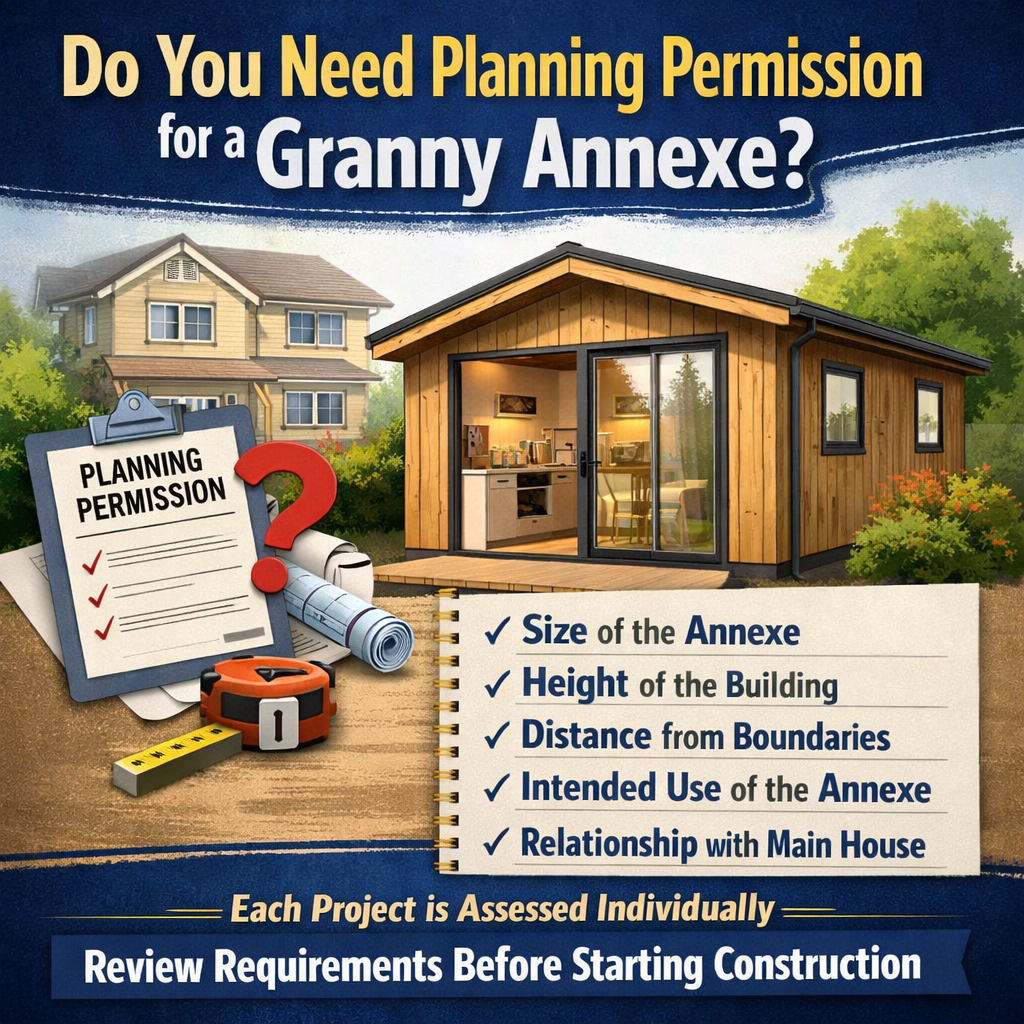
Local planning authorities typically consider factors such as:
• the size of the annexe
• the height of the building
• the distance from property boundaries
• the intended use of the annexe
• the relationship with the main house
Each project is assessed individually, which is why it is important to review planning requirements before starting construction.
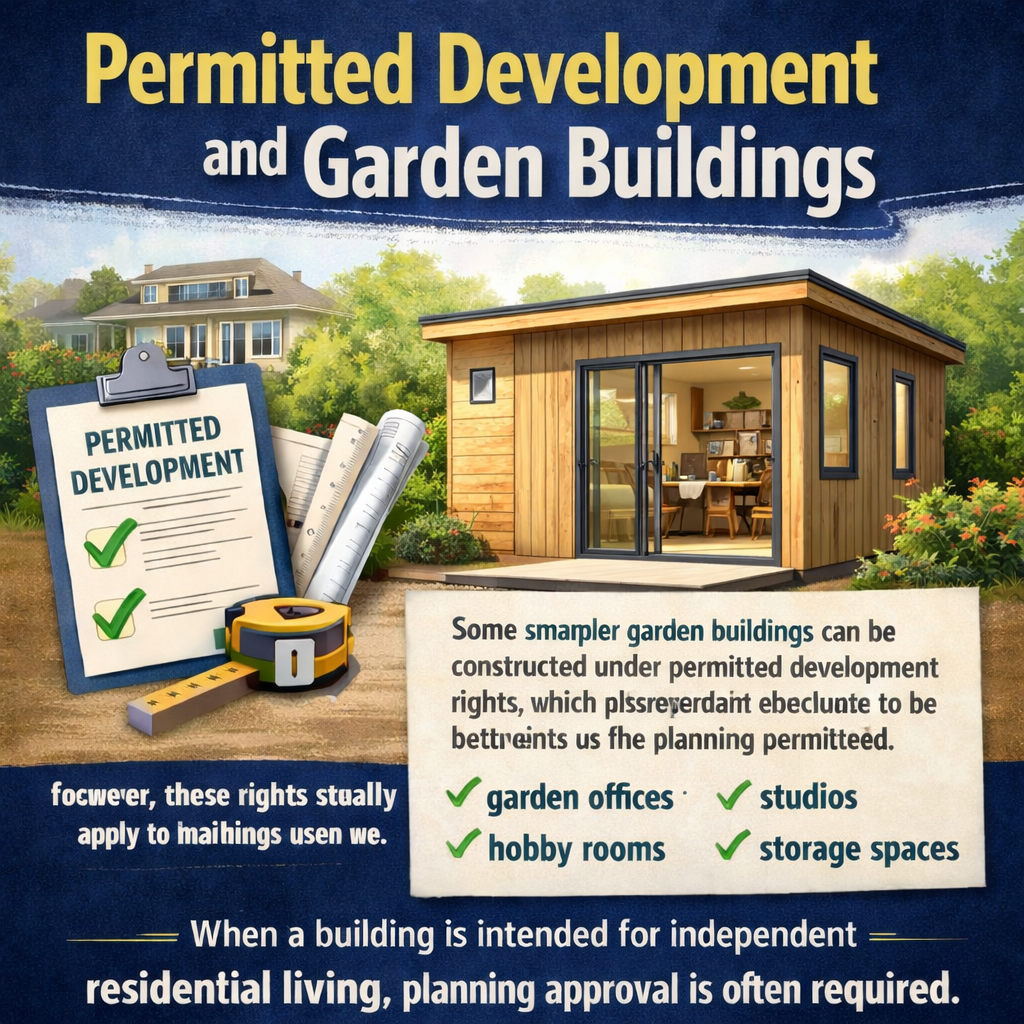
Some smaller garden buildings can be constructed under permitted development rights, which allow certain structures to be built without full planning permission.
However, these rights usually apply to buildings used as:
• garden offices
• hobby rooms
• studios
• storage spaces
When a building is intended for independent residential living, planning approval is often required.
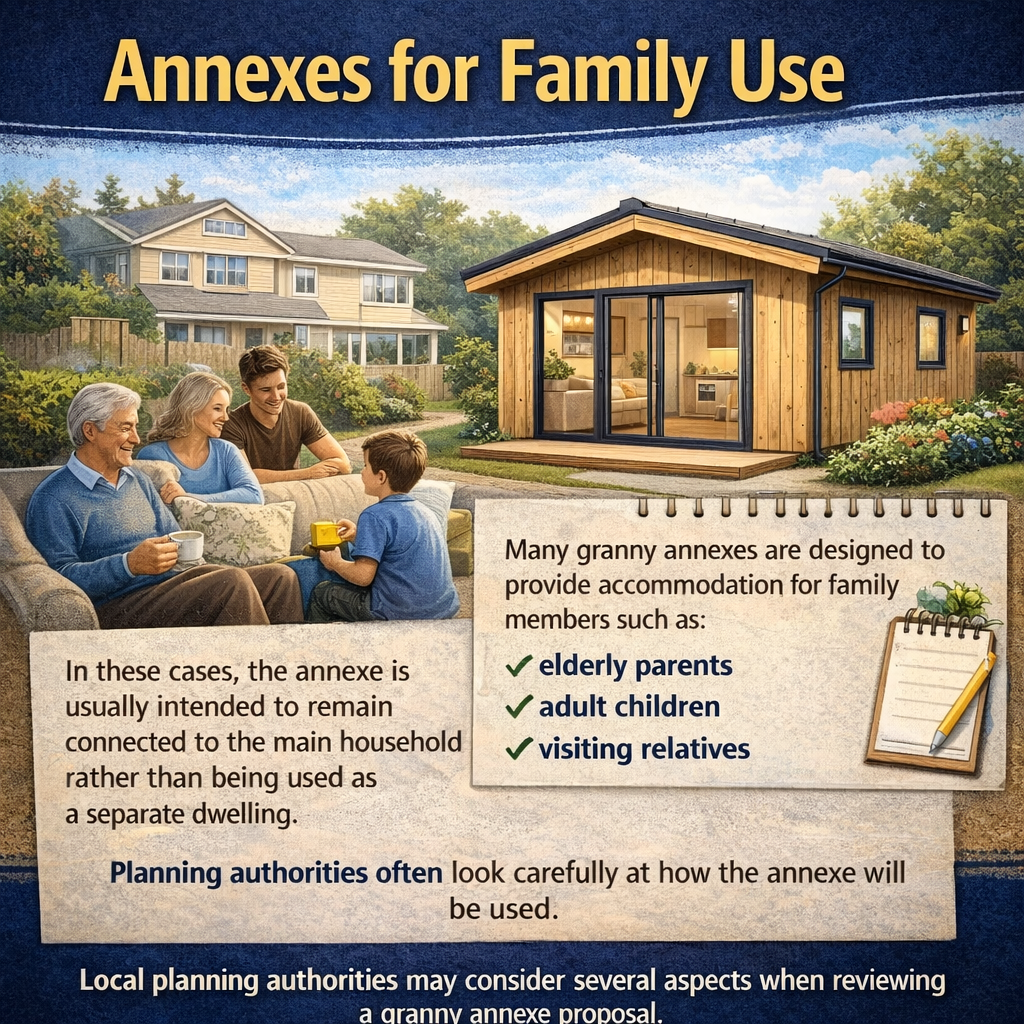
Many granny annexes are designed to provide accommodation for family members such as:
• elderly parents
• adult children
• visiting relatives
In these cases, the annexe is usually intended to remain connected to the main household rather than being used as a separate dwelling.
Planning authorities often look carefully at how the annexe will be used.
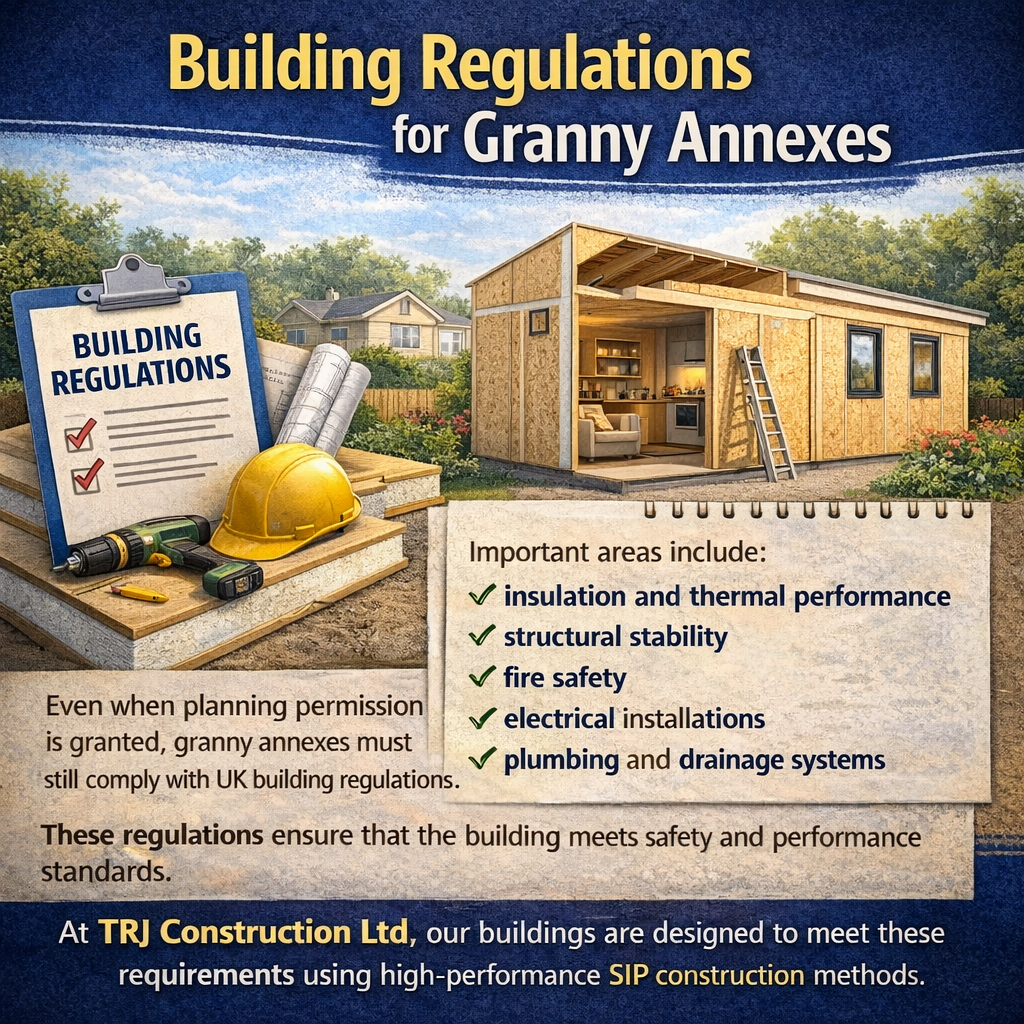
Even when planning permission is granted, granny annexes must still comply with UK building regulations.
These regulations ensure that the building meets safety and performance standards.
Important areas include:
• insulation and thermal performance
• structural stability
• fire safety
• electrical installations
• plumbing and drainage systems
At MyGrannyAnnexe, our buildings are designed to meet these requirements using high-performance SIP construction methods.

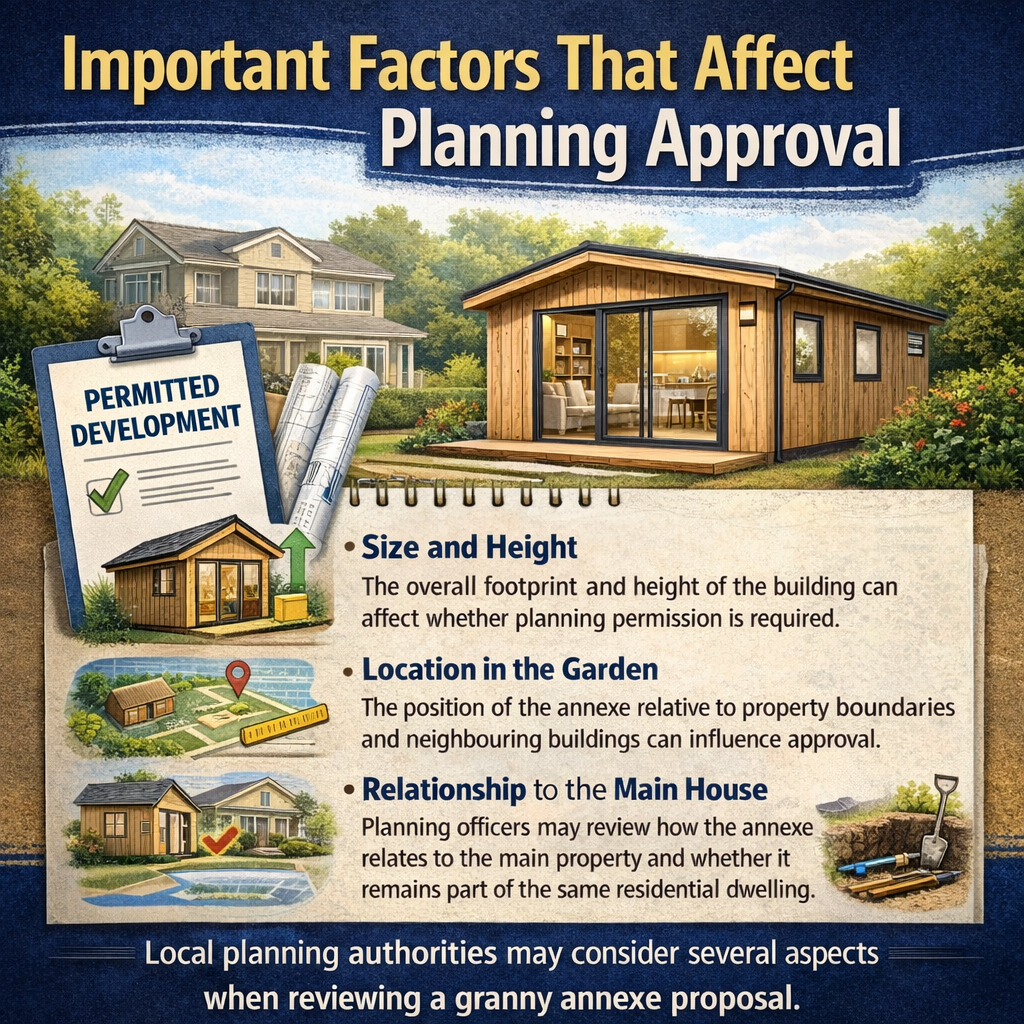
Local planning authorities may consider several aspects when reviewing a granny annexe proposal.
These can include:
Size and Height
The overall footprint and height of the building can affect whether planning permission is required.
Location in the Garden
The position of the annexe relative to property boundaries and neighbouring buildings can influence approval.
Relationship to the Main House
Planning officers may review how the annexe relates to the main property and whether it remains part of the same residential dwelling.
Access and Services
Utilities such as drainage, water and electricity must be properly planned.
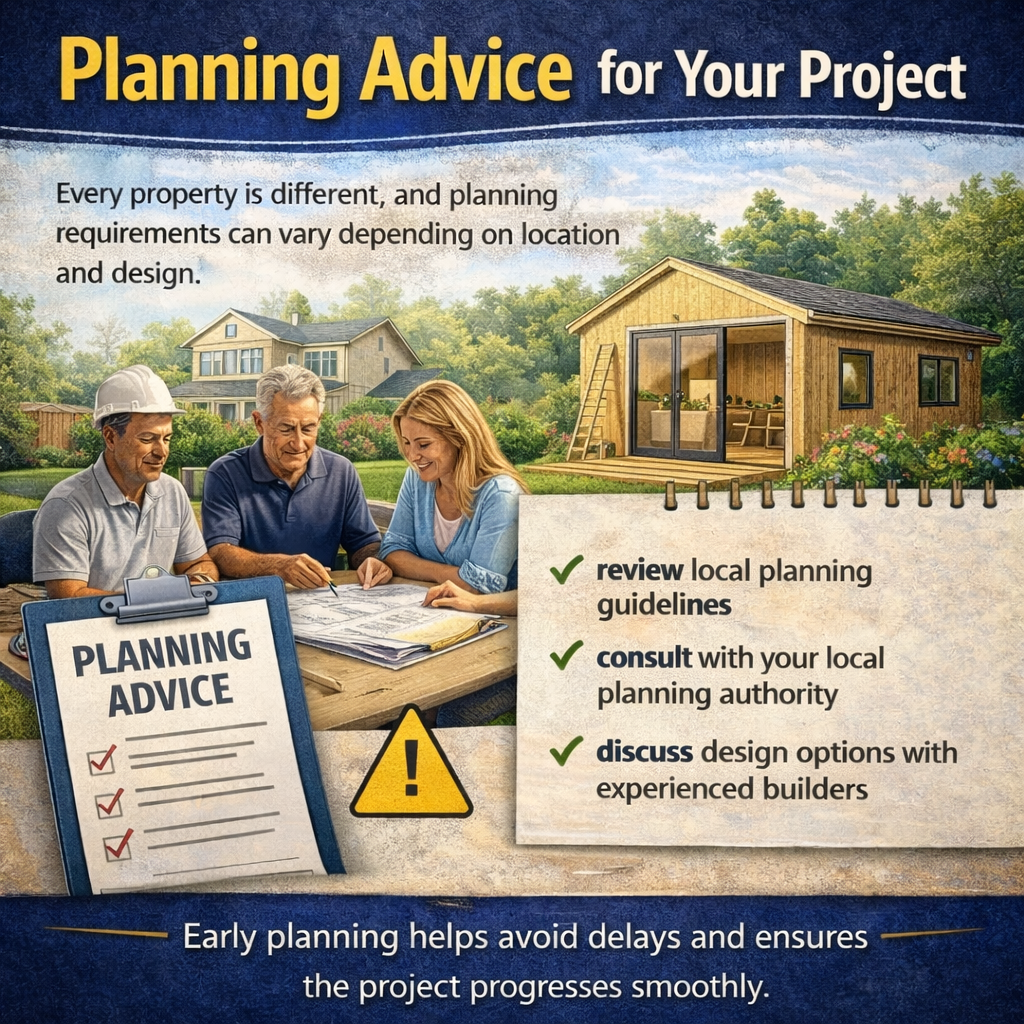
Every property is different, and planning requirements can vary depending on location and design.
Before starting a granny annexe project it is always recommended to:
• review local planning guidelines
• consult with your local planning authority
• discuss design options with experienced builders
Early planning helps avoid delays and ensures the project progresses smoothly.